
How to Integrate a UL/CSA Recognized Gas Detection Head into an OEM System
For gas detection equipment manufacturers targeting North American markets, selecting the right sensor is only one part of the development process.
The complete detection head may also require signal processing electronics, firmware, mechanical design and an enclosure suitable for the intended installation. When UL and CSA recognition is required, these elements can add further complexity to the development and qualification process.
One approach is to integrate a pre-engineered gas detection head that combines the level of sensing, mechanical protection and electronics into an existing detector design.
The N.E.T. UL/CSA Heads serve this purpose, offering different levels of integration for fixed flammable gas detection systems requiring North American recognition.

What do OEMs need to consider when developing a gas detection head?
When developing a fixed gas detection system, OEMs may need to manage several different engineering activities:
- selecting or developing the gas sensor
- developing the electronics to process the sensor signal
- implementing firmware for compensation and signal linearisation
- designing the mechanical detection head
- selecting a suitable enclosure
- meeting UL and CSA recognition requirements.
For manufacturers who prefer not to tackle these topics internally, using a pre-engineered detection head can reduce the number of components and development activities that must be managed at system level.
N.E.T. designed its UL/CSA product line with this integration approach in mind.
What are N.E.T. UL/CSA Heads?
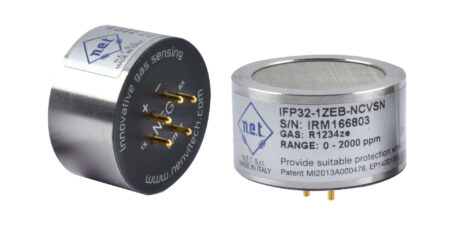
The N.E.T. UL/CSA product line consists of stainless-steel and aluminium gas detection heads designed for fixed flammable gas detection applications where North American recognition is required.
The range covers different levels of integration, from sensor housing to a more complete sensor and electronics housing package for NDIR applications.
Depending on the configuration, the head can be:
- Integrated into an existing gas detector
- Incorporated into a new gas detection system design
- Used as a standalone field device connected to a controller.
This allows OEM manufacturers to select the level of integration that best matches their own electronics and system architecture.
Which sensing technologies can be integrated?
The UL/CSA Heads can accommodate the N.E.T. gas sensing portfolio, including:
For NDIR configurations, additional electronics and communication options are available.
This means the mechanical platform can be used across different gas detection technologies whilst also allowing OEMs to maintain a consistent approach to detector integration.
What output options are available?
The available communication interfaces depend on the selected head configuration.
| Configuration | Interface |
|---|---|
| XIN | Industry-standard 4–20 mA analogue output |
| XIN/DIN | RS-485 with Modbus protocol |
| NDIR configurations | Pre-calibrated sensing solution with electronics, depending on version |
The 4–20 mA output available with XIN versions supports integration with established industrial control and gas detection architectures.
For digital addressable systems, XIN/DIN versions provide RS-485 communication using the specific NDIR Modbus protocol.
This allows system designers to choose between a conventional analogue architecture and a digitally addressable detector network according to the requirements of the final system.
Are N.E.T. UL/CSA Heads supplied pre-calibrated?
Only with NDIR sensors. The heads are available ready to use with a pre-calibrated sensor.
For configurations using NDIR sensors calibration can also be performed by the user through dedicated software or by using Modbus commands.
This can simplify commissioning and servicing because calibration and sensor settings can be accessed through the electronic interface rather than requiring a separate signal-processing architecture to be developed by the OEM.
What UL and CSA recognition do the enclosures have?
The N.E.T. range includes stainless-steel and aluminium flameproof Ex d enclosures with UL and CSA recognition.
Different enclosure families are recognised according to different standards:
| N.E.T. head family | Recognition |
|---|---|
| NETC2 and NETC3 | Recognised as components according to UL/CSA 60079-0 and 60079-1 |
| NET2X/NETC2 and NET3X/NETC3 | Recognised as components according to UL/CSA 61010-1 |
It is important for OEM designers to distinguish component recognition from certification of the final gas detection system. The N.E.T. heads provide recognised components that can be incorporated into the manufacturer’s wider equipment architecture.
The compliance requirements of the complete detector therefore need to be evaluated as part of the final OEM system design.
Can special gas detection ranges be requested?
Yes. Special ranges are available on request, mainly on NDIR sensors.
This is particularly relevant for OEM projects where the detection range must be adapted to the target application or to the operating parameters of the final detector.
The required sensing technology, measurement range and head configuration should therefore be defined during the integration phase.
When does a pre-engineered UL/CSA gas detection head make sense?
A pre-engineered detection head is particularly relevant when an OEM wants to reduce the amount of dedicated engineering required around the sensor.
Instead of separately managing:
Sensor, electronics, firmware, enclosure, recognition the manufacturer can start from a more integrated detection subsystem and focus development resources on the final instrument, controller and application.
The N.E.T. UL/CSA range is therefore suited to manufacturers that:
- already have a gas detector platform but require a recognised sensor head
- are developing a new fixed gas detection system
- need analogue 4–20 mA or Modbus communication
- want to integrate a pre-calibrated sensing element
- require different sensor technologies within a common mechanical platform
- prefer to reduce internal development of sensor processing electronics and firmware.
How do the different levels of integration help OEM manufacturers?
There is no single correct level of sensor integration for every gas detector.
An OEM that already has its own signal-processing electronics may primarily require a recognised enclosure and sensing element.
Another manufacturer may prefer to integrate a more complete NDIR solution with signal processing and communication already included.
For this reason, the N.E.T. UL/CSA range covers multiple levels of integration rather than a single fixed architecture.
The sensor must become part of a complete detector architecture that includes mechanical integration, signal management, communications, calibration and the appropriate recognised components.
N.E.T. UL/CSA Heads combine these elements at different integration levels, with:
- Pre-calibrated gas sensors (NDIR)
- Electrochemical, catalytic bead and infrared sensing options
- 4–20 ma output on XIN configurations
- RS-485 Modbus communication on XIN/DIN configurations
- Field calibration capabilities for NDIR sensors
- Stainless-steel or aluminium flameproof Ex d enclosures
- UL/CSA recognised component configurations
- Multiple rear thread options for mechanical integration
- PC software and connection boards for NDIR configurations
- Special ranges available on request.
The result is a modular approach that allows OEM manufacturers to integrate the level of sensing and electronics they require without necessarily developing the complete gas detection head from the beginning.
Contact the N.E.T. technical team and request technical information on N.E.T. UL/CSA Heads.