Why A2L Refrigerants Require Reliable Leak Detection
Refrigerant Monitoring for Modern HVAC-R Systems
The HVAC-R industry is undergoing a significant transition as manufacturers move toward refrigerants with lower Global Warming Potential compared to many traditional alternatives.
Among the refrigerants increasingly adopted in modern heating, cooling and refrigeration systems are A2L refrigerants used in heat pumps, chillers and refrigeration equipment.
What Are A2L Refrigerants?
A2L refrigerants are a category of refrigerants classified by lower flammability characteristics.
One of the most widely adopted examples is R-32, commonly used in air conditioning systems, heat pumps and other HVAC-R applications.
A2L refrigerants are used in several types of equipment, including:
- Heat pumps
- Chillers
- Commercial HVAC systems
- Refrigeration equipment
- Refrigerant-based appliances
Their adoption introduces new design considerations, particularly when equipment is installed in enclosed spaces, technical rooms or areas where refrigerant leaks must be detected quickly and reliably.
Why Are A2L Refrigerants Becoming More Common?
The growing adoption of A2L refrigerants is driven by the need to balance environmental targets, system performance and practical implementation requirements.
For many HVAC-R manufacturers, A2L refrigerants represent an important option in the transition toward lower-GWP technologies while maintaining compatibility with a wide range of heating and cooling applications.
However, this transition also affects how HVAC-R systems are designed.
Manufacturers increasingly need to evaluate:
- Refrigerant leak detection
- Safety system integration
- Sensor lifetime
- Maintenance requirements
- Communication interfaces
- Compliance with applicable safety standards
- Long-term system reliability
For this reason, refrigerant monitoring is becoming part of the overall safety architecture of modern HVAC-R equipment.
Flammability Considerations in A2L Systems
A2L refrigerants are classified as having lower flammability characteristics, but leak detection remains an important safety measure in many HVAC-R applications.
In enclosed spaces, plant rooms or technical areas, refrigerant leaks may create operating conditions that require continuous monitoring and rapid detection.
This is especially relevant for systems where refrigerant concentration must be monitored as part of the equipment safety strategy.
In many projects, refrigerant monitoring is also evaluated in relation to broader HVAC-R safety requirements, including applications where standards such as EN378 are considered during system design.
Why R-32 Leak Detection Is Becoming More Relevant
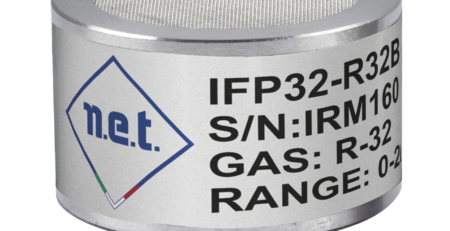
R-32 is one of the most widely used A2L refrigerants in modern HVAC-R systems.
As its use continues to expand across heat pumps, air conditioning systems and refrigeration equipment, manufacturers are increasingly looking for reliable sensing technologies capable of supporting continuous refrigerant monitoring.
R-32 leak detection is particularly relevant in applications where:
- Equipment is installed in enclosed or semi-enclosed areas
- Continuous monitoring is required
- Early leak detection supports system safety
- Long-term sensor stability is important
- Maintenance reduction is a priority
For OEM manufacturers, the choice of sensor technology can directly affect product design, system reliability and long-term operating costs.
Why Refrigerant Leak Detection Matters
Reliable refrigerant leak detection helps manufacturers and operators improve the safety and reliability of HVAC-R systems.
A refrigerant monitoring system can support:
- Early leak detection
- Improved system safety
- Reduced refrigerant losses
- Protection of equipment and infrastructure
- Integration with alarms or control systems
- Compliance-oriented system design
- Long-term operational reliability
As HVAC-R systems become more complex, gas detection is increasingly considered an integrated part of system design rather than an additional accessory.
Which Sensor Technologies Are Used for Refrigerant Detection?
Different sensing technologies can be used for refrigerant monitoring applications.
The choice of technology depends on several factors, including:
- Target refrigerant
- Required measuring range
- Expected sensor lifetime
- Calibration strategy
- Maintenance requirements
- Environmental conditions
- Integration needs
- Output and communication requirements
For fixed refrigerant monitoring systems, long-term stability, selectivity and low maintenance requirements are often key decision factors.
This is why NDIR technology is commonly adopted in refrigerant leak detection applications.
Why NDIR Technology Is Commonly Used for Refrigerant Monitoring
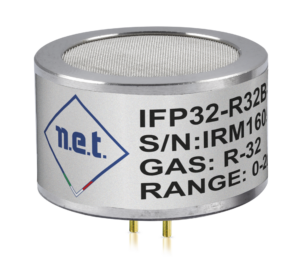
NDIR, or Non-Dispersive Infrared technology, is widely used for refrigerant leak detection because it provides important advantages in continuous monitoring applications.
NDIR sensors are commonly selected for:
- High selectivity
- Long-term stability
- Reduced maintenance requirements
- Long operational lifetime
- Reliable performance in fixed monitoring systems
- Suitability for industrial and HVAC-R environments
For HVAC-R manufacturers, these characteristics can help simplify system design while supporting stable and reliable refrigerant monitoring over time.
Refrigerant Detection for OEM Manufacturers
For OEM manufacturers, selecting a refrigerant sensor is not only a matter of detection performance.
The sensor must also fit into the overall product architecture.
Important evaluation criteria include:
- Mechanical integration
- Electrical interface
- Communication protocol
- Calibration approach
- Sensor replacement strategy
- Expected lifetime
- Maintenance requirements
- Certification and compliance needs
This is particularly important for manufacturers developing heat pumps, chillers, refrigerant-based appliances and fixed gas detection systems. In these applications, the right sensing solution can help reduce development complexity and support long-term reliability.
N.E.T. Solutions for A2L Refrigerant Detection
N.E.T. develops gas sensing technologies for refrigerant monitoring applications in HVAC-R and industrial environments.
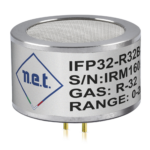
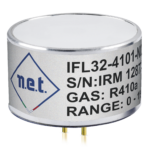
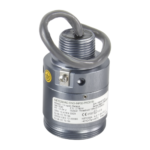
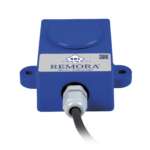
For A2L refrigerant detection, N.E.T. offers both dedicated NDIR sensing platforms and integrated detection solutions.
IREF PRO
IREF LITE
NETC3 DIN-R Head
REMORA
What are A2L refrigerants?
A2L refrigerants are refrigerants classified by lower flammability characteristics. They are increasingly used in HVAC-R applications as part of the transition toward lower-GWP refrigerant technologies.
Is R-32 an A2L refrigerant?
Yes. R-32 is one of the most widely adopted A2L refrigerants and is commonly used in air conditioning systems, heat pumps and other HVAC-R equipment.
Why is leak detection important for A2L refrigerants?
Leak detection helps identify refrigerant leaks at an early stage, supporting system safety, reducing refrigerant losses and improving overall reliability.
Why is R-32 leak detection important?
R-32 is widely used in HVAC-R equipment. As its adoption increases, reliable R-32 leak detection becomes important for manufacturers designing systems where refrigerant monitoring is part of the safety architecture.
Which sensor technologies are used for refrigerant monitoring?
Several sensing technologies can be used for refrigerant monitoring. NDIR technology is commonly adopted in fixed monitoring systems because of its selectivity, long-term stability and reduced maintenance requirements.
Why are NDIR sensors used for refrigerant leak detection?
NDIR sensors are used for refrigerant leak detection because they offer high selectivity, stable long-term performance and reduced maintenance requirements, making them suitable for continuous HVAC-R monitoring applications.
What should OEM manufacturers consider when selecting a refrigerant sensor?
OEM manufacturers should consider the target refrigerant, measuring range, sensor lifetime, maintenance requirements, output signals, communication protocol, mechanical integration and compliance requirements.
Are refrigerant sensors used in heat pumps and chillers?
Yes. Refrigerant sensors are increasingly used in heat pumps, chillers and HVAC-R systems where leak detection is required as part of the equipment safety strategy.
Looking for Refrigerant Detection Solutions?
Whether you are developing heat pumps, chillers, refrigerant-based appliances or fixed gas detection systems, our team can help identify the most suitable sensing solution for your application: info@nenvitech.com