
FAQ

N.E.T. at AHR Expo 2026: Advancing HVACR Safety with NDIR Gas Sensing Technology

N.E.T. is pleased to announce our participation as the HVACR industry converges on the Las Vegas Convention Center for the 2026 AHR Expo, From February 2–4, our team will be available at Booth 1851 (Central Hall). N.E.T. reinforces its focus on supplying the most complete range of Refrigerant Gas detection solutions for the HVAC+R market. Our solutions are designed and...

Hydrogen Monitoring: Achieving Integrated Safety with the new MAK sensors

Hydrogen is regarded as the future of clean energy, but its use requires high safety standards. As a highly flammable, odourless gas with an extremely high dispersion rate, constant monitoring is not only an operational necessity but also a critical requirement for every infrastructure, from electrolyzers to refuelling stations. In this scenario, traditional detection technologies, such as pellistors and electrochemical cells,...

Understanding ATEX Directives: Workplace and Equipment Safety Standards

What does ATEX stand for? The term ATEX is derived from the French title of the 94/9/EC directive: Appareils destinés à être utilisés en ATmosphères EXplosibles. It encompasses two European Directives that establish minimum safety requirements for equipment and workplaces within explosive atmospheres.   What are the two primary ATEX Directives? ATEX legislation is divided into two specific areas of responsibility:   Directive 1999/92/EC (Workplace Directive):...

NET NDIR SENSOR WARM-UP TIME: FULL OPERATION vs. FULL SPECIFICATIONS

NET NDIR SENSORS WARMUP TIME: FULL OPERATION vs. FULL SPECIFICATIONS The Data Sheet and User Manual for all our NIDR sensors states that warm-up time is 60 seconds for full operation at 25 °C and at least 30 min for full specifications. We are often asked what is the difference between these two conditions. At power-up the sensor performs initial “bootstrap”...

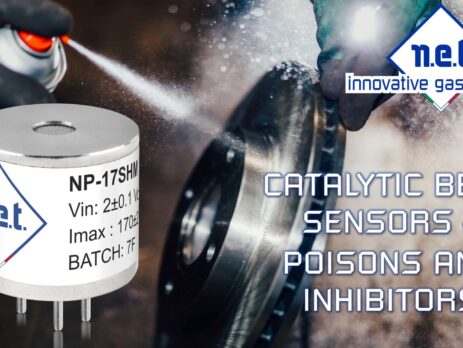
CATALYTIC BEAD SENSORS – POISONS AND INHIBITORS

A Pellistor, or catalytic bead sensor, monitors the presence of a combustible gas or vapor in air (or atmospheres containing oxygen) up to the Lower Flammable Limit (LFL). A Pellistor operates on the principle that when a combustible gas/air mixture is in contact with the catalyst surface, maintained at about 500°C as current is passed through it in a Platinum...

CROSS FACTOR CALIBRATION FOR NET CATALYTIC BEAD SENSORS

CATALYTIC BEAD SENSOR RELATIVE RESPONSES TO VARIOUS GASES Our Pellistor, or catalytic bead sensor, is employed to monitor the presence of a combustible gas or vapor in air (or atmospheres containing oxygen) up to the Lower Explosive Limit (LEL). A Pellistor operates on the principle that when a combustible gas/air mixture is in contact with the catalyst surface, maintained at about 500°C...

AIN vs XIN – WHICH TRANSMITTER IS RIGHT FOR ME

The Cyber Head from NET is an ATEX/IECEx certified stainless steel enclosure complete with sensor and electronic transmitter, designed to be used as a component of a fixed flammable gas detection system or as a full conformity standalone field device. The Cyber Head is available also in a non explosion-proof version made in plastic for residential, commercial and light...

COMPLETE LIST OF AVAILABLE REFRIGERANT SENSORS

NET offers the most complete range of Non-Dispersive (NDIR) sensors on the market today for refrigerant gas detection: 44 common gases, plus two more currently under development. Those gases are available across 3 different platforms (IRNET PRO, IREF PRO, IREF LITE) and the available ranges vary according to the specific gas. For example, non-flammable refrigerants may be available only in ppm...

DETECTING AMMONIA WITH NET IREF PRO NDIR SENSORS

Ammonia is a among the most common gases found in the industry. Vastly used in wastewater treatment, leather, rubber, paper, food and beverage industries, it is also making a strong comeback in cold storage applications and refrigeration systems due to its environmental friendliness. Ammonia toxicity is well known. The pungent smell of ammonia in the air is detectable at concentrations as...

SENSOR INSTALLATION GUIDELINES

NET manufactures and sells a complete range of gas sensing devices on an OEM basis for industrial and commercial applications used by instrument manufacturers worldwide. NET does not manufacture complete instruments or detectors and let alone complete gas detection systems. Nonetheless, oftentimes users ask us for sensor installation guidelines in terms of number and location of sensors. This is a rather...