Hydrogen and Ammonia gas detection: two hazards, two sensing approaches
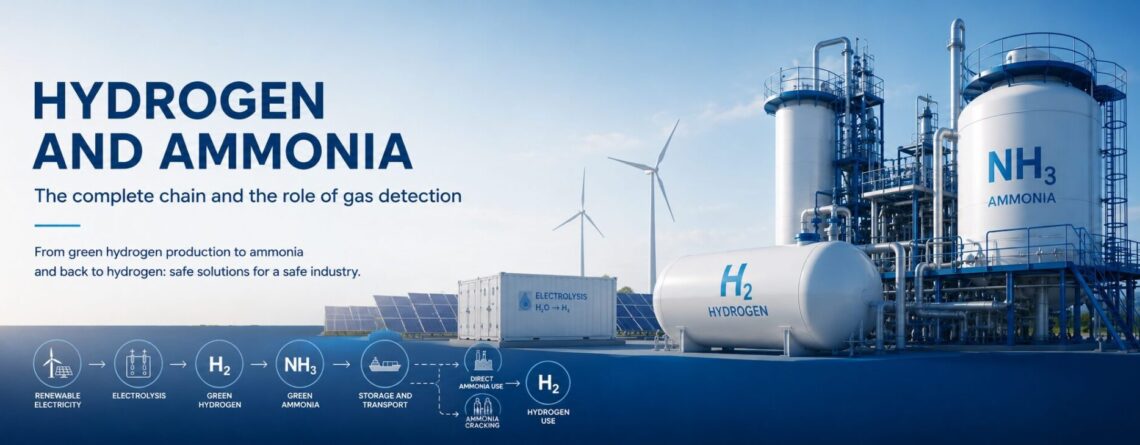
Ammonia is often discussed as a practical carrier for Hydrogen.
The reason is clear: Hydrogen can be produced from renewable electricity, but storing and transporting it at scale remains technically demanding.
Ammonia offers a different route. It can chemically store Hydrogen in a form that is already produced, handled and transported by industry on a large scale.
But from a gas detection perspective, Ammonia does not simplify the safety scenario.
It changes it.
When Ammonia becomes part of the Hydrogen value chain, gas detection must cover two different hazards with two different sensing approaches: Hydrogen and Ammonia.
Hydrogen introduces a flammability risk.
Ammonia introduces toxicity and exposure risk.
For OEM gas detection system manufacturers, this distinction is essential when designing equipment for Hydrogen production, Ammonia storage, Ammonia cracking or final Hydrogen use.
Why Ammonia is relevant to the Hydrogen value chain
Hydrogen is not a primary energy source. It must be produced.
When Hydrogen is produced through water electrolysis using renewable electricity, it can become part of a low-emission energy system. However, once produced, Hydrogen still needs to be stored, transported and delivered to the point of use.
This is where the challenge begins.
Hydrogen is a very light gas. It can be compressed, liquefied or transported through dedicated infrastructure, but each option has technical implications. Compression requires high pressure. Liquefaction requires very low temperatures. Pipelines, tanks and distribution systems require dedicated design and leak management.
Ammonia offers an alternative because Hydrogen is chemically bound inside the NH₃ molecule.
Ammonia is made of one Nitrogen atom and three Hydrogen atoms. It is not a free source of Hydrogen, because Hydrogen is required to produce it. But once synthesized, Ammonia can be easier to store and transport in some industrial scenarios, especially where existing Ammonia infrastructure can be used.
A simplified pathway is:
Renewable electricity → Electrolysis → Green Hydrogen → Green Ammonia → Storage and transport → Direct Ammonia use or Ammonia cracking → Hydrogen use
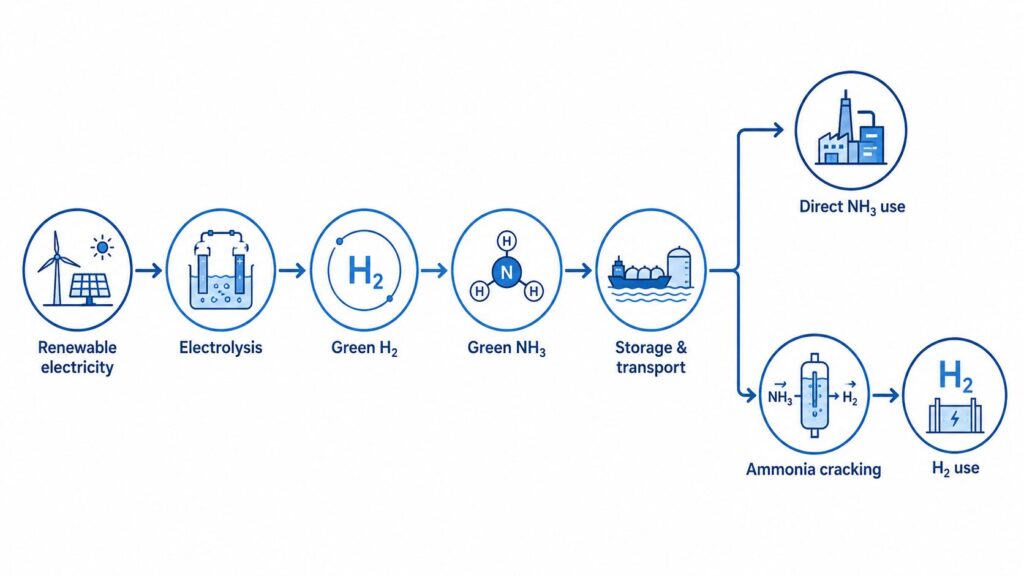
The key point is this: Ammonia can support part of the Hydrogen logistics chain, but it does not remove the need for gas detection. It adds a second gas risk that must be considered.
Ammonia is a carrier, not a shortcut
It is important to avoid a common misunderstanding.
Ammonia is not a primary source of clean Hydrogen. To produce Ammonia, Hydrogen must first be available. Today, much of the Hydrogen used in conventional Ammonia production still comes from fossil-based processes.
For Ammonia to be considered green, the Hydrogen used to produce must come from low-emission or renewable sources, such as electrolysis powered by renewable electricity.
This distinction matters because it keeps the discussion technically accurate. Ammonia can make Hydrogen storage and transport more practical in certain applications, but it does not eliminate the upstream production challenge.
From a safety perspective, it also means that the value chain may involve both gases:
- Hydrogen during production, compression, storage or final use;
- Ammonia during synthesis, storage, transport and handling;
- both Hydrogen and Ammonia around Ammonia cracking systems.
What happens during Ammonia cracking?
Ammonia cracking is the process used to convert Ammonia back into Hydrogen.
In simplified terms, Ammonia is heated and passed through a reactor containing a catalyst. Under controlled process conditions, Ammonia decomposes into Hydrogen and nitrogen:
2 NH₃ -> N₂ + 3 H₂
After cracking, the Hydrogen stream may require separation or purification, depending on the final application.
For gas detection, the cracking stage is particularly relevant. It is one of the points in the value chain where Hydrogen and Ammonia can both be part of the operating environment.
Hydrogen may be present as the desired output gas.
Ammonia may be present as feed gas or residual unconverted gas.
This creates a dual monitoring requirement: flammable gas detection for Hydrogen and toxic gas detection for Ammonia.
H₂ and NH₃ are not the same detection problem
Hydrogen and Ammonia behave differently, create different hazards and require different sensing approaches.
Hydrogen is highly flammable. Because of its low molecular weight, it can disperse rapidly, but in enclosed or poorly ventilated areas it may accumulate and create a fire or explosion risk.
The main detection objective for Hydrogen is early leak identification before a flammable atmosphere can develop.
Ammonia is toxic and irritating. A leak can create a direct exposure risk for people working near storage tanks, transfer points, valves, reactors or process equipment.
The main detection objective for Ammonia is toxic gas monitoring and personnel protection.
This is why Hydrogen and Ammonia should not be treated as single gas detection problem.
They belong to the same Hydrogen-related value chain, but they require different sensor technologies and different safety considerations.
Where gas detection is required across the value chain
In Ammonia-based Hydrogen infrastructure, gas detection may be required at several stages.
| Process stage | Main gas risk | Detection objective |
|---|---|---|
| Electrolysis | Hydrogen leakage | Detect H₂ near generation, compression or enclosure points |
| Hydrogen compression and storage | Hydrogen leakage | Monitor areas where H₂ could accumulate in case of leak |
| Ammonia synthesis | Hydrogen and ammonia | Monitor both H₂ handling and possible NH₃ leakage |
| Ammonia storage and transport | Ammonia toxicity | Detect NH₃ around tanks, valves, pipelines and transfer points |
| Ammonia cracking | Hydrogen and residual ammonia | Detect H₂ flammability risk and NH₃ exposure risk |
| Final hydrogen use | Hydrogen leakage | Monitor H₂ near fuel cells, process systems or enclosed spaces |
For OEMs, this table is not only a safety checklist. It is also a design input.
The sensor must be selected according to the gas, the installation point, the integration architecture and the safety objective of the final equipment.
Choosing the right sensing approach
A gas detection system for Ammonia-based Hydrogen applications may need to combine different sensing technologies.
For Hydrogen detection, N.E.T. offers MAK sensors based on Thermal Conductivity technology, also known as Katharometric Technology.
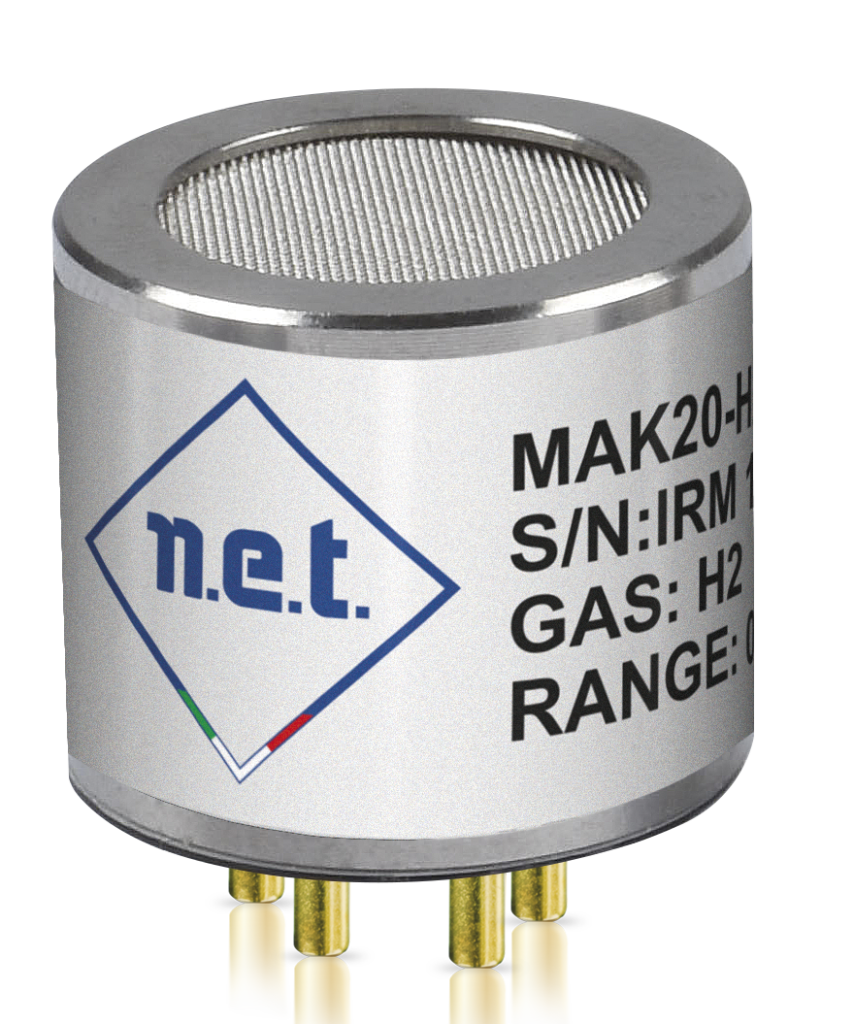
The MAK sensor platform is designed for OEM integration and industrial applications, offering:
- Individual calibration and testing, for measurements you can trust
- Extended temperature range (-40 °C to +60 °C), for use in any environment
- Active Environmental compensation (Temperature, RH, Pressure)
- Internal microprocessor, for advanced signal processing
- Standard industrial size, to fit existing detectors
- Low power consumption
- Fast T90 response time (< s), for critical and life-saving applications
- Outstanding long-term stability of 1 % F.S./year
- ModBus for ease of integration
- Signal versatility: voltage and optional bridge or pellistor output
- Solid, rugged construction with stainless steel enclosure
- Standard industrial accepted negative or positive pinout
MAK sensor is compatible with most existing detector designs, including platforms originally developed for NDIR sensors, which enables drop-in integration without major redesign.
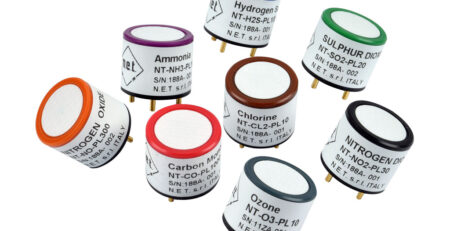
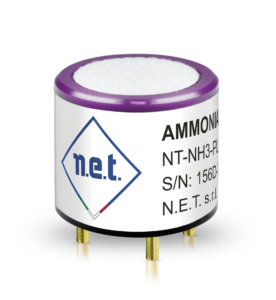
For Ammonia detection, N.E.T. offers Premium Line electrochemical cells for NH₃ detection.
Manufactured in Japan exclusively under N.E.T. specifications, the Premium Line is designed for manufacturers of fixed and portable detectors who require superior stability and long-term reliability.
Technical Advantages:
- Compliance with EN 45544-2: Our cells meet exact specifications for measurement limits, deviation in clean air/test Gas, and response/recovery time
- 3-Year Expected Lifetime: Unlike standard cells that degrade quickly, the Premium Line offers a 3-year operational life, significantly reducing the total cost of ownership.
- Mitigating Cross-Sensitivity: A clear example is our Ammonia NH₃ sensor. While most sensors on the market show increased readings in the presence of H2S, N.E.T. sensors maintain a negative response.
- Extreme Thermal Resistance: Environmental factors typically affect sensitivity and baseline stability. Our H2S-HT cell is unique in the industry, maintaining performance within an expanded range of -40°C to +65°C.
OEM considerations for Hydrogen and Ammonia detection
For OEMs, sensor selection is rarely based on the target gas alone.
A sensor becomes part of a complete gas detection system.
This means that the technical evaluation should include integration, calibration strategy, expected operating environment, maintenance requirements, documentation and long-term availability.
OEM considerations for Hydrogen and Ammonia detection
| Requirement | H₂ detection | NH₃ detection |
|---|---|---|
| Main hazard | Flammability | Toxicity / exposure |
| N.E.T. technology | MAK thermal conductivity sensor | Premium Line electrochemical cell |
| Target gas | Hydrogen | Ammonia |
| Example measurement range | 0–4% vol H₂ | 0–100 / 0–300 / 0–1000 / 0–5000 ppm NH₃ |
| Typical role in the system | Hydrogen leak detection | Ammonia leak and exposure monitoring |
| OEM relevance | Integration into gas detection equipment for hydrogen-related applications | Selection of NH₃ range according to the detection objective |
N.E.T. designs and manufactures gas sensing technologies for OEM customers developing industrial gas detection equipment.
In Hydrogen and Ammonia applications, the role of the sensor is to support gas monitoring at the points where leaks or exposure risks may occur.
For Hydrogen-related applications, N.E.T. provides MAK Thermal Conductivity sensors for H₂ detection.
For Ammonia-related applications, N.E.T. provides Premium Line electrochemical cells for NH₃ detection.
Together, these technologies allow OEMs to build gas detection systems that address both hazards involved in Ammonia-based Hydrogen infrastructure: Hydrogen flammability and Ammonia toxicity.
This is particularly relevant for equipment used in:
- Hydrogen production and storage;
- Ammonia handling and transfer;
- Ammonia cracking systems;
- industrial safety systems;
- OEM gas detection devices for Hydrogen-related applications.
Conclusion
Ammonia can help make Hydrogen easier to store and transport, but it does not make gas detection simpler.
It introduces a dual safety requirement.
Hydrogen must be monitored because of its flammability risk.
Ammonia must be monitored because of its toxicity and exposure risk.
For OEM gas detection system manufacturers, this means selecting the right sensing approach for each gas and each point of the value chain.
N.E.T. supports this requirement with MAK Thermal Conductivity sensors for Hydrogen detection and Premium Line electrochemical cells for Ammonia detection.
For technical information or application support: info@nenvitech.com
Would you like to explore the Hydrogen market with us?
See you at Hydrogen Expo!
Hamburg, October 20–22.
Hall B6, Italian Pavilion