
NET NEWSLETTER Q1-26
2026 marks our 25th anniversary. While this milestone confirms our stability, our focus remains on the future and new developments. Following our participation at AHR Expo and MCE, we are pleased to outline the latest technical developments. One of the highlights of this year is the NETC3 DIN-R, a complete, ready-to-use and cost-effective detection head aimed at making refrigerant leak detection...

N.E.T. at MCE 2026: Setting New Standards in Gas Detection for Refrigeration
We are pleased to announce we will be exhibiting at MCE – Mostra Convegno Expocomfort 2026, the international tradeshow where companies in the HVAC+R, renewable energy and water world meet new customers and strengthen relationships with those who design, install and build plants and systems for comfort in the industrial, residential and commercial sectors. We will showcase our latest innovations...
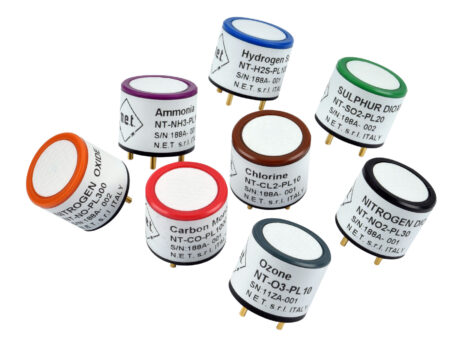
High-Performance Gas Detection: The Science Behind the N.E.T. Premium Line Electrochemical Cells
In the rigorous landscape of industrial safety, the accuracy of Gas detection is not just a technical requirement, it is a critical safety mandate. While electrochemical technology is a global standard for toxic Gas sensing, it often faces challenges regarding environmental cross-sensitivity, consumption rates, and thermal stability. At N.E.T., we address these technical hurdles through our Premium Line, a range of...
IECEX VS ATEX: NAVIGATING GLOBAL CERTIFICATION STANDARDS FOR GAS SENSING
In the specialized field of hazardous area equipment, certification is not merely a legal requirement, it is a guarantee of safety and performance. For instrument manufacturers (OEMs) integrating gas sensors or detection heads into their devices, understanding the differences between IECEx and ATEX is critical for global market access. What is the IECEx System? IECEx is the international certification system developed by...
NET CYBER HEADS: Technical specifications and integration guide
NET Cyber Heads are ready-to-use enclosures that combine Gas sensors and signal-processing electronics. These units function as either integrated components for Gas detectors or as standalone field devices. Applications for Manufacturers and Integrators The Cyber Head series is engineered for OEMs and system integrators seeking to streamline product development. Utilizing these pre-certified units eliminates the need for: In-house sensor development or sourcing. Designing firmware...

Gas Detection in Power Plants: Ensuring Safety, Efficiency, and Operational Continuity
In the 2026 energy landscape, gas-fueled power plants can compensate the intermittency of renewable sources; however, managing the chemical energy of natural Gas requires extreme precision. For gas detection system manufacturers, providing reliable solutions for thermal power plants is a key priority. Certified Safety: SIL2 and ATEX Compliance In the power supply industry, certifications are the primary drivers of trust. Functional Safety: All N.E.T....